The Commercial Vehicle Safety Alliance (CVSA) has announced Aug. 21-27 as the dates for this year’s Brake Safety Week.
Brake Safety Week is an annual commercial motor vehicle brake-safety inspection, enforcement and education initiative conducted by law enforcement jurisdictions in Canada, Mexico and the U.S.
During Brake Safety Week, inspectors will conduct their usual North American Standard Level I and V Inspections and capture and report brake-related data to CVSA, specifically inspectors will also capture and provide data on brake hose/tubing chafing violations – the focus area for this year’s brake safety campaign.
The results will be released in the fall.
Commercial motor vehicle inspectors in Canada, Mexico and the U.S. inspected 35,764 commercial motor vehicles during last year’s event.
Combined, for a North American total, 35,764 commercial motor vehicles were inspected last year. Twelve percent of those vehicles were restricted from travel because inspectors found brake-related critical vehicle inspection item conditions and placed those vehicles out of service, using CVSA’s North American Standard Out-of-Service Criteria.
Brake-related violations comprise the largest percentage of all out-of-service violations cited during roadside inspections. Improperly installed or poorly maintained brake systems can reduce the braking capacity and stopping distance of trucks and buses, which poses a serious risk to driver and public safety.
What Will Inspectors Focus On?
A CVSA news release cited the following regarding what inspectors will focus on during the brake portion of a vehicle inspection.
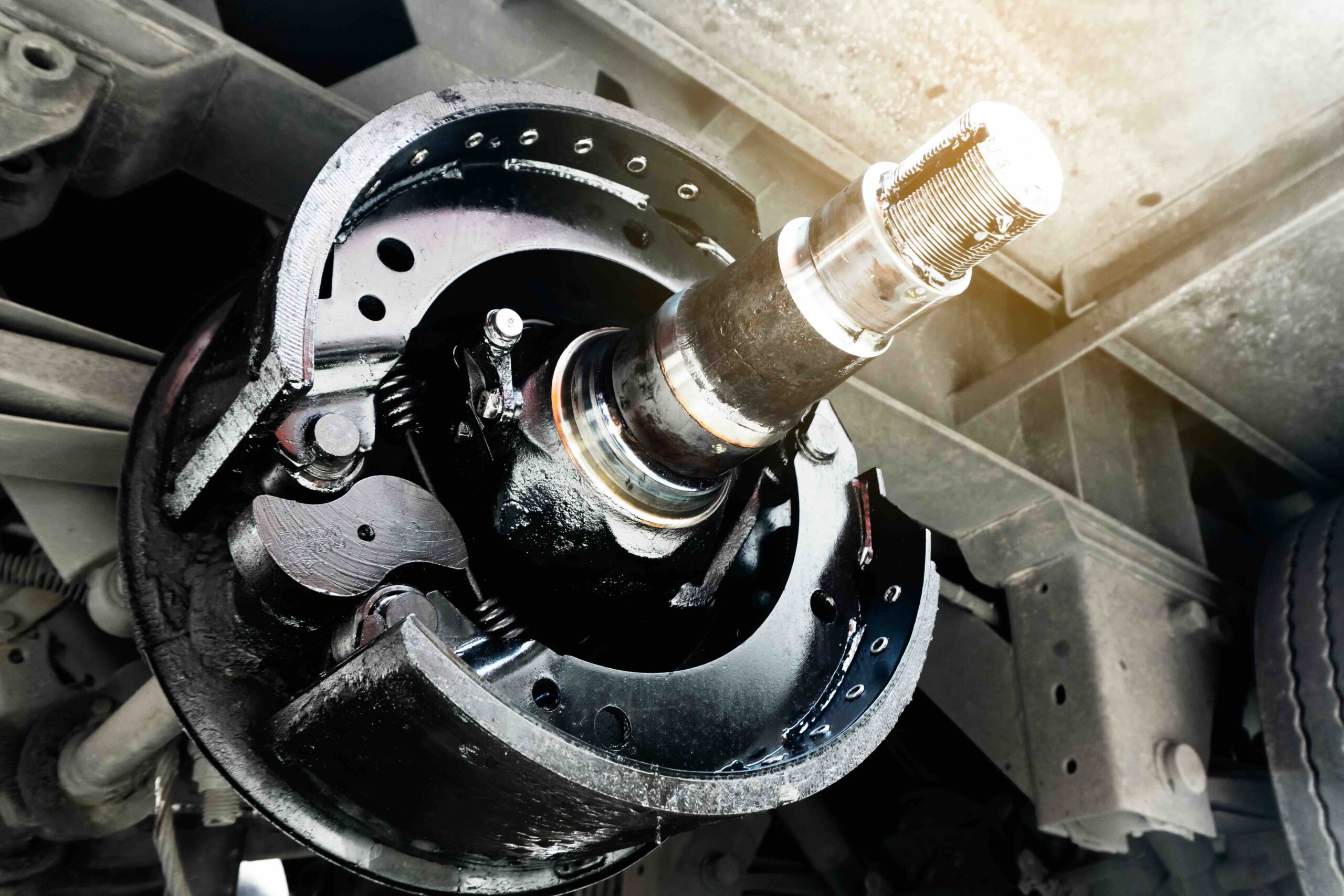
“During the brake portion of a vehicle inspection, inspectors will look for missing, non-functioning, loose, contaminated or cracked parts on the brake system, and non-manufactured holes (such as rust holes and holes created by rubbing or friction) and broken springs in the spring brake housing section of the parking brake.”
“They will listen for audible air leaks around brake components and lines, and ensure the air system maintains air pressure between 90-100 psi (620-690 kPa). Inspectors will also check for S-cam flip-over and measure pushrod travel. They will check that slack adjusters are the same length (from center of S-cam to center of clevis pin) and the air chambers on each axle are the same size. They will also inspect required brake-system warning devices, such as ABS malfunction lamp(s) and low air-pressure warning devices. In addition, inspectors will ensure the breakaway system is operable on the trailer, and inspect the tractor protection system, including the bleed-back system on the trailer.”
In addition to reporting total inspections and brake-related out-of-service violations, inspectors will also capture and provide data on brake hose/tubing chafing violations – the focus area for this year’s Brake Safety Week.
“Poorly maintained brake systems can reduce the braking capacity and stopping distance of large trucks and motorcoaches, which poses a serious risk to driver and public safety,” said CVSA President Captain John Broers with the South Dakota Highway Patrol. “In those split-second emergency situations, the proper functionality of the brake systems on large commercial motor vehicles is crucial.”
More About Brake Safety Campaigns
Outreach and educational efforts by inspectors, participating motor carriers and others in the industry also take place during CVSA’s brake safety campaigns and are integral to the success of the campaign.
Operation Airbrake is a CVSA program in partnership with the U.S. Department of Transportation’s Federal Motor Carrier Safety Administration.
More than 3.4 million brakes have been inspected since the program’s inception in 1998.